Originally published in BusinessMirror on February 24, 2026.
A recent report by the International Monetary Fund (IMF) has rung an alarm bell that the Philippines’ ambition of a cleaner energy mix can be derailed by a surprising barrier: a gaping workforce deficit.
The archipelagic country, blessed with some of the world’s best natural renewable energy resources such as wind, solar, tidal, and geothermal, aims to reach a 35% share of renewable energy in the power generation mix by 2030 and 50% by 2040. As it stands, the transition to clean energy is not constrained anymore by ambition or policy targets, but by human capital.
Citing data from the Department of Labor and Employment (DOLE), the IMF report details that roughly 75% of renewable energy companies struggle to recruit workers with technical knowledge, skills, and credentials in engineering, construction, and project development. Without people to implement, manage, and operate renewable energy projects, even well-financed solar and wind endeavors risk stalling.
The IMF calls this shortage of skilled professionals and technical personnel “the biggest hurdle to deploying renewable energy projects” in the Philippines. Compounding the challenge, our training systems are outdated and fragmented, often failing to respond to market needs because trainers themselves often lack exposure to rapidly evolving technologies.
It is precisely in this context that the Future Renewable Energy Engineering (FREE) scholarship program of the People of Asia for Climate Solutions (PACS) was initiated.
With the belief that more than infrastructure, it is people who power the energy transition, the Manila-based climate advocacy group PACS has been sending Filipino high school graduates to study renewable energy engineering in China, where the clean energy sector alone contributed over 2 trillion US dollars to the country’s GDP last year.
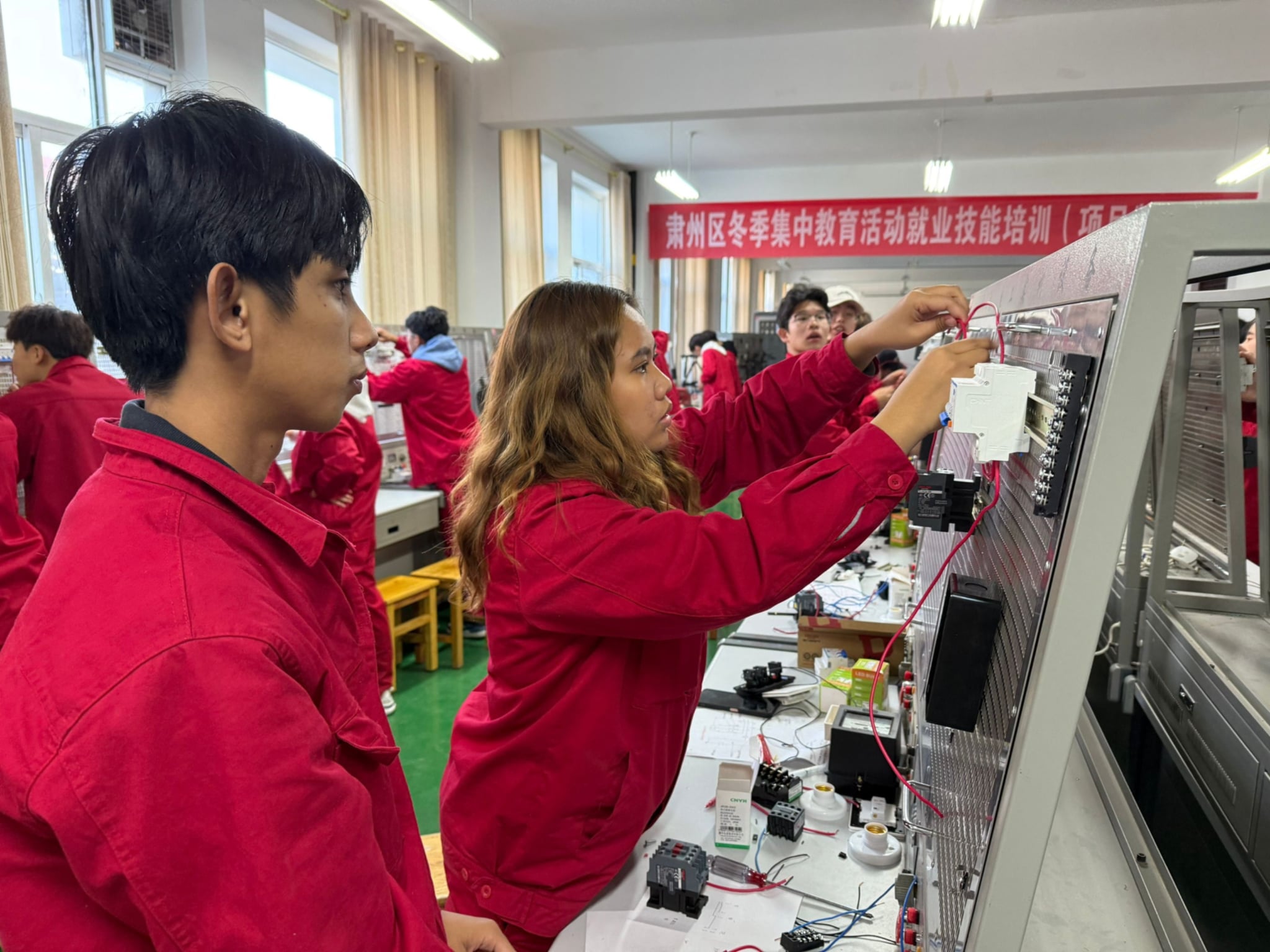
PACS Future Renewable Energy Engineering (FREE) scholars take part in hands-on practical training at Jiuquan Vocational Technical University to build practical skills to support clean energy solutions in their community.
Empowered with language training, travel support, and scholarships, 22 students from Leyte and Nueva Ecija are currently studying wind power and solar power, combining hands-on classroom learning with direct exposure to actual project operations through internships at renewable energy companies. They train alongside Chinese classmates, building early professional networks with future industry partners.
These young Filipinos are gaining both academic foundations and practical technical insights urgently needed by the country’s clean energy sector. In 2026, the first batch will be graduating. They will return to their communities as skilled multilingual technicians and engineers ready to accelerate project deployment, strengthen technical training systems, improve workflows, and support community resilience economically, environmentally, and socially.
Still, the Philippines' renewable energy ambitions require far more than a handful of well-trained scholars. A 2025 study by the International Labor Organization (ILO) projects that the Philippines will need around 350,000 additional skilled workers by 2030 to deliver renewable energy projects already in the pipeline. In response, PACS has also started organizing study tours that bring Filipino solar professionals and entrepreneurs to Chinese companies to enhance technical expertise in photovoltaic (PV) technologies while fostering long-term collaboration.
“The workshop we had in Baoding is a very pivotal moment in terms of how we want to push and to really emphasize the importance of renewable energy in the Philippines. We aim to enhance ourselves in terms of how we train, how we advocate, and how we represent renewable energy in the Philippines,” said Richmond Reyes, an alumnus of the program and president of EcoSolutions Philippines.
Most importantly, such capacity-building must increasingly happen within the country, closer to home and aligned with local renewable energy needs. Philippine universities must also expand renewable energy programs in their curricula and establish regular cross-border exchanges with leading renewable energy countries such as China and Denmark. Human capital must be treated as central to the energy transition, alongside technology and finance. Investments in scholarships and practical, industry-aligned training programs may not yield immediate returns, but they are strategic national endeavors essential to avoiding unrealized clean energy goals.
By nurturing talents today through forward-looking education and training, the Philippines can prepare for the energy challenges of tomorrow. A fast and fair renewable energy transition is only possible when we build a strong pool of homegrown professionals ready to harness the country’s abundant wind, sunlight, and waves.
Media Contact:
Leovy Ramirez (she/her)
Communications Officer
+639156618382